Everybody who’s using the Exchange Management Shell (or Powershell in general) needs to get some output to another medium, like a Word document. You can copy and paste the output from the Management Shell command prompt, but I found out … Continue reading →
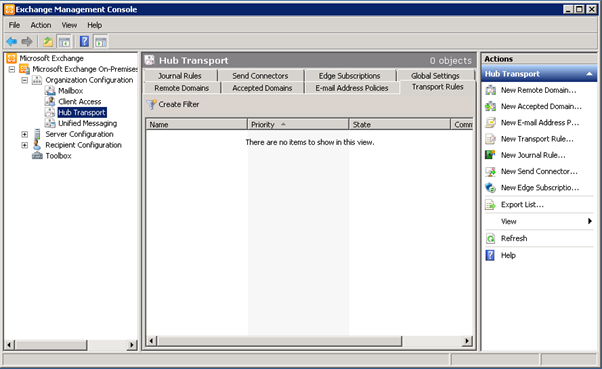
Using Transport Rules in Exchange Server 2010 you can add fancy disclaimers to your outgoing e-mail messages. Transport Rule information is stored in Active Directory and shared between all Hub Transport servers in the organization. This way a consistent behavior … Continue reading →
Bulk management of user management with the Exchange Management Shell can be very useful, especially if you want to create a lot of mailboxes. Suppose there’s an OU named “RND” in Active Directory and you want to mailbox enable all … Continue reading →
Autodiscover is een standaard feature in Exchange Server 2007 en hoger die gebruikt wordt door Outlook 2007 en hoger. Gezien het aantal vragen wat ik hierover krijg heb ik een aantal blogposts gemaakt waarin ik deze functionaliteit wil uitdiepen. Autodiscover … Continue reading →
Looking at the number of blog posts and Tweets it’s hard to imagine you haven’t heard already about the new support policy around hardware virtualization and Exchange Server 2010: http://blogs.technet.com/b/exchange/archive/2011/05/16/announcing-enhanced-hardware-virtualization-support-for-exchange-2010.aspx Bottom line is that the Unified Communications server role in … Continue reading →
Twitter
Facebook
RSS